There is no faster way to build a fire, and that is precisely the point. A campfire is one of the last activities in modern life that cannot be optimized, delegated, or streamed. It demands the oldest currency there is: attention, paid slowly, in person. Kindling laid too thick will smother the flame; logs added too soon will collapse it. Fire rewards patience and punishes haste, which makes it — we would argue — the perfect first evening of any stay in the woods.
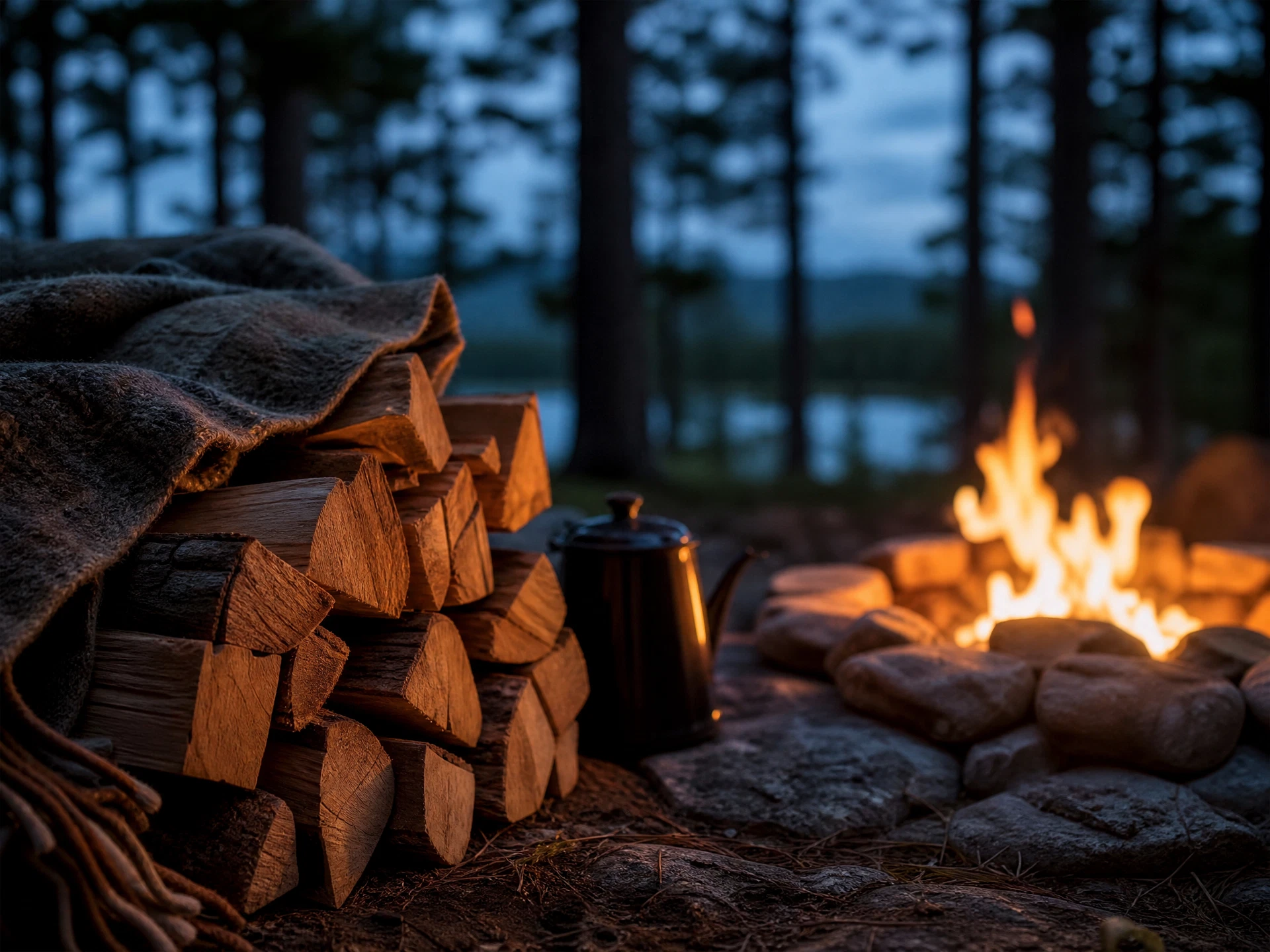
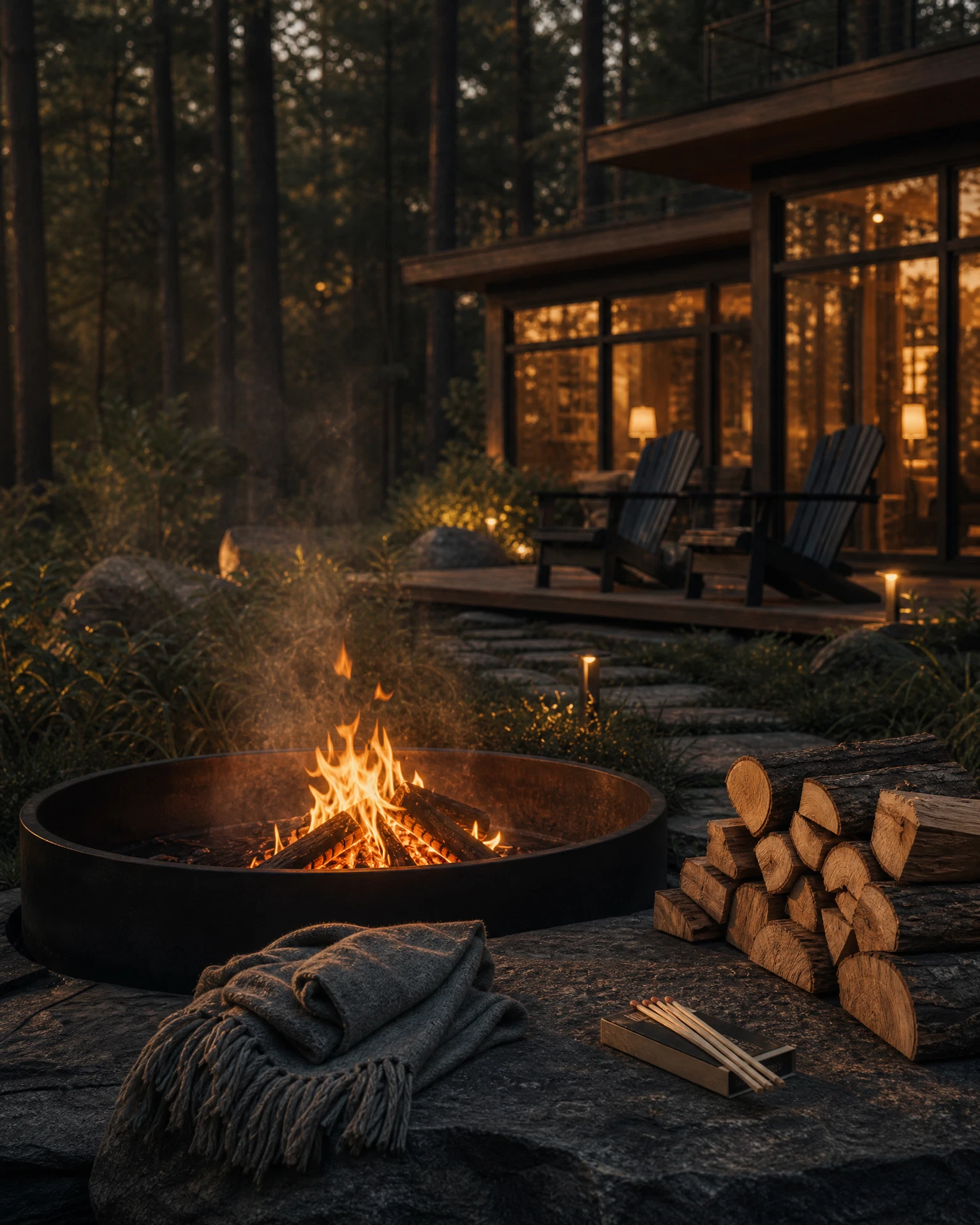
At every Woods Collection retreat, the fire is waiting for you the night you arrive. Cedar kindling, split and stacked. Seasoned oak in the rack. A single match on the stone ledge. We call it The First Fire, and it is the founding ritual of the entire experience — not because it is dramatic, but because of what it does to people. Phones stay in pockets. Voices drop half an octave. Someone pulls a chair closer. The evening reorganizes itself around a point of warmth, the way evenings did for roughly the whole of human history until about twenty years ago.
The Architecture of a Slow Fire
Every fire keeper has a method, and defends it like a family recipe. Ours is the log cabin lay, for reasons that are admittedly sentimental: two split logs parallel, two crossed above them, a loose heart of cedar shavings and birch bark at the center. Birch bark is the forest's own fire-starter — its oils light even when damp, and it peels from fallen trees like paper meant for this purpose. Light the heart, then do the hardest thing in all of fire craft: nothing. Let the flame find its own way up through the structure. It will, every time, if you resist the urge to help.
“Fire rewards patience and punishes haste — which makes it the perfect first evening of any stay in the woods.”
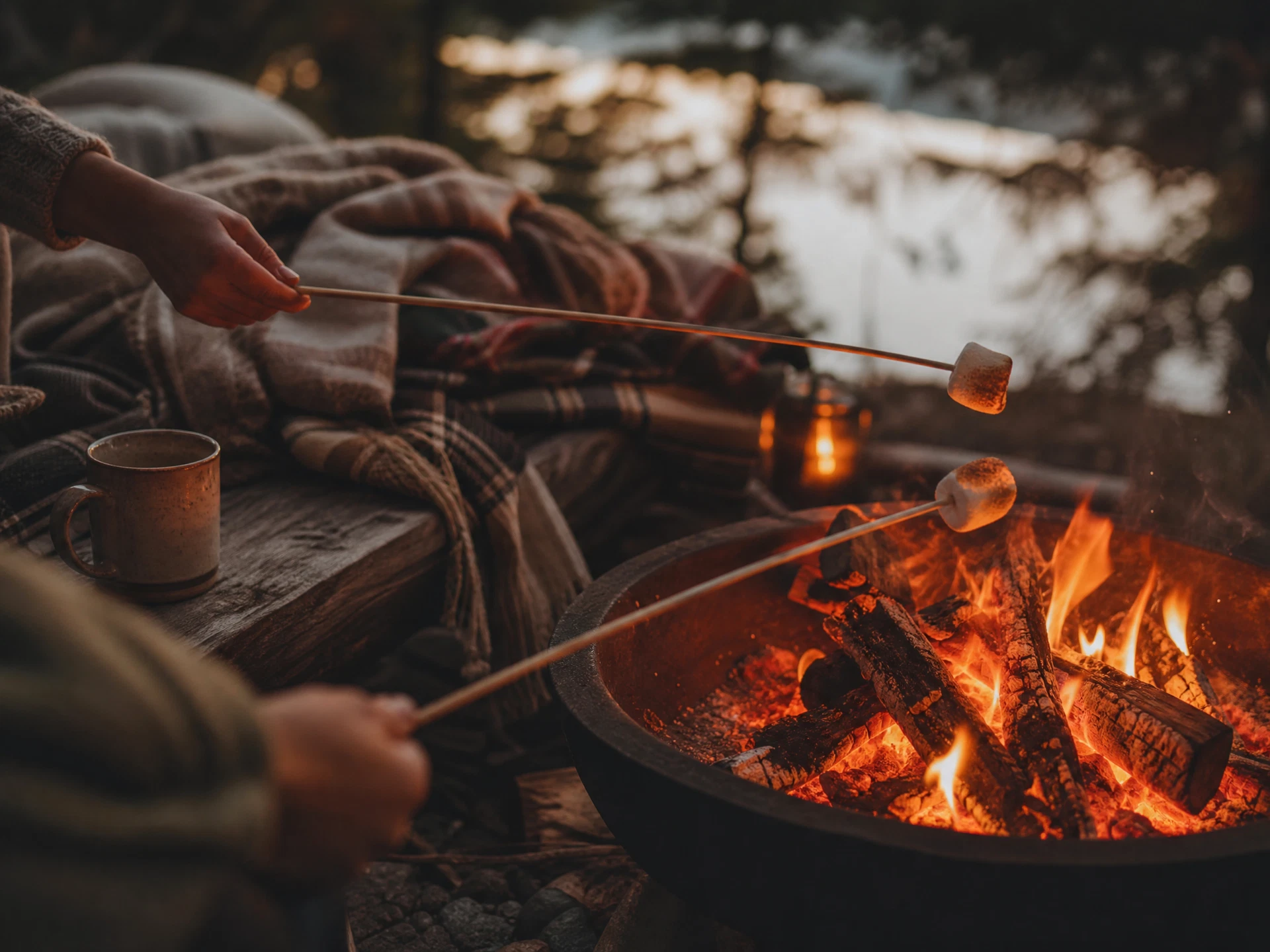
Then comes the long middle of the evening, which is where the fire performs its quiet magic. Psychologists who study such things report that flame lowers blood pressure and loosens conversation, and while we do not doubt the data, anyone who has sat late beside embers already knew. There is something about not facing each other — everyone turned toward the same warm point — that makes honesty easier. The best stories arrive after the flames settle, in the ember hours, when the fire has stopped performing and so has everyone around it.
Tend It Like You Mean It
A few convictions, earned over many evenings: dry wood is nine-tenths of success, and we will always leave you more than you need. Feed the fire one log at a time, laid gently — a thrown log is a broken mood. When the night ends, let the embers dim on their own schedule while the last conversation finds its ending. And before you go in, look up. The stargazing is part of the ritual too; the fire simply keeps you outside long enough to remember the sky is there.
We measure our success in stories, and it is remarkable how many of the stories guests tell us begin the same way: 'We were sitting by the fire, and…' Build yours slowly. The evening will take care of the rest.
The Woods Journal · Saugatuck, Michigan