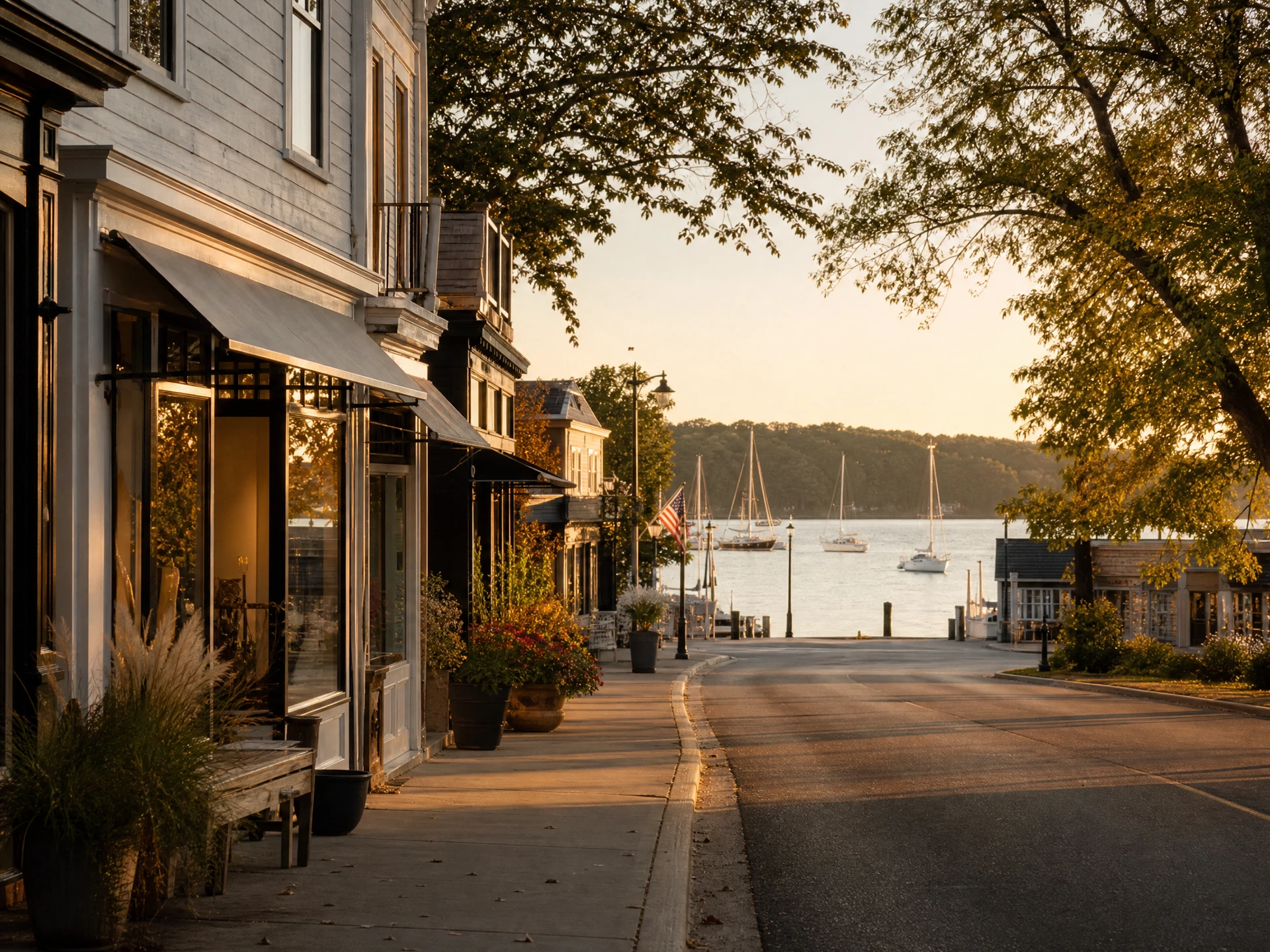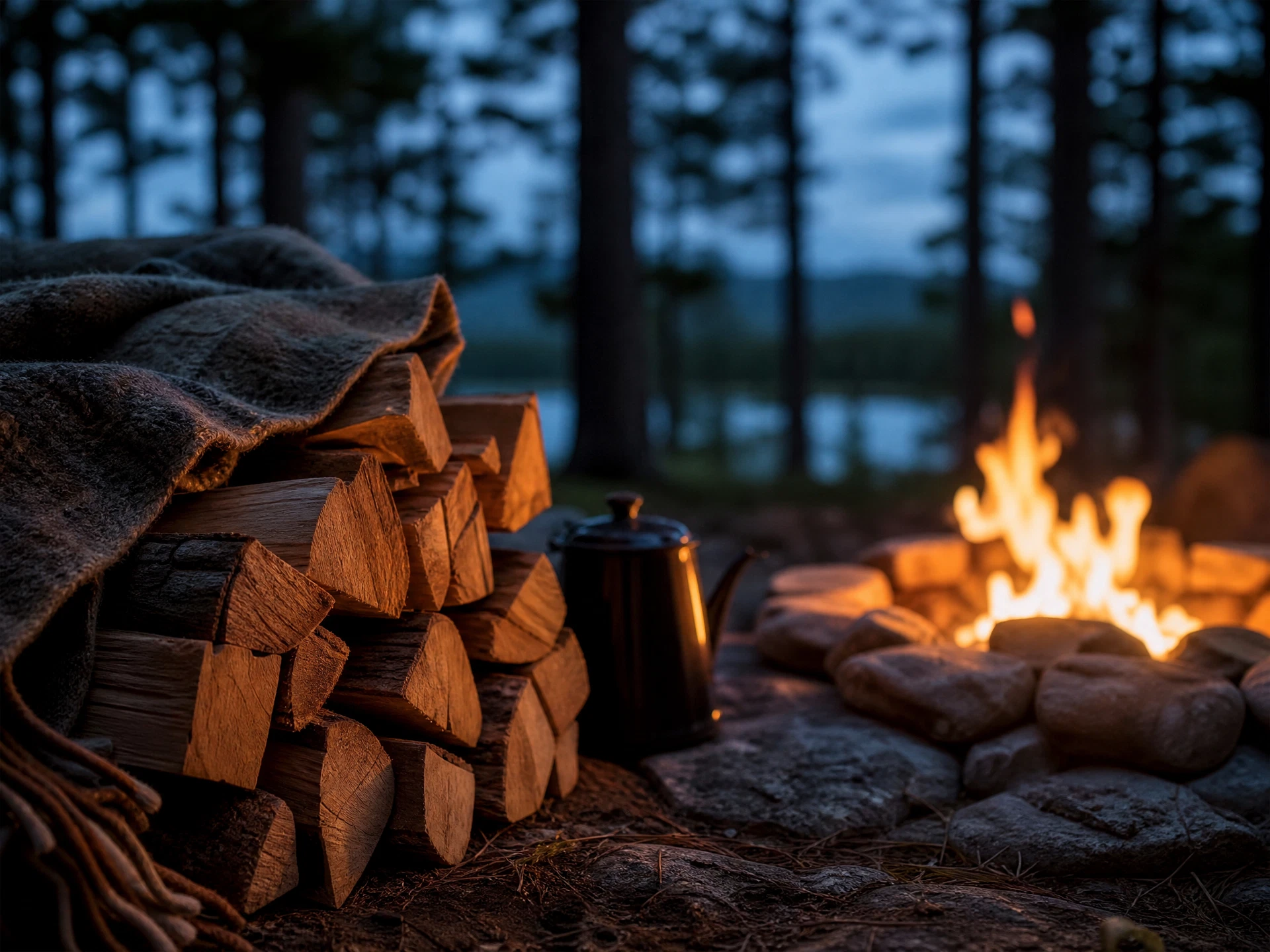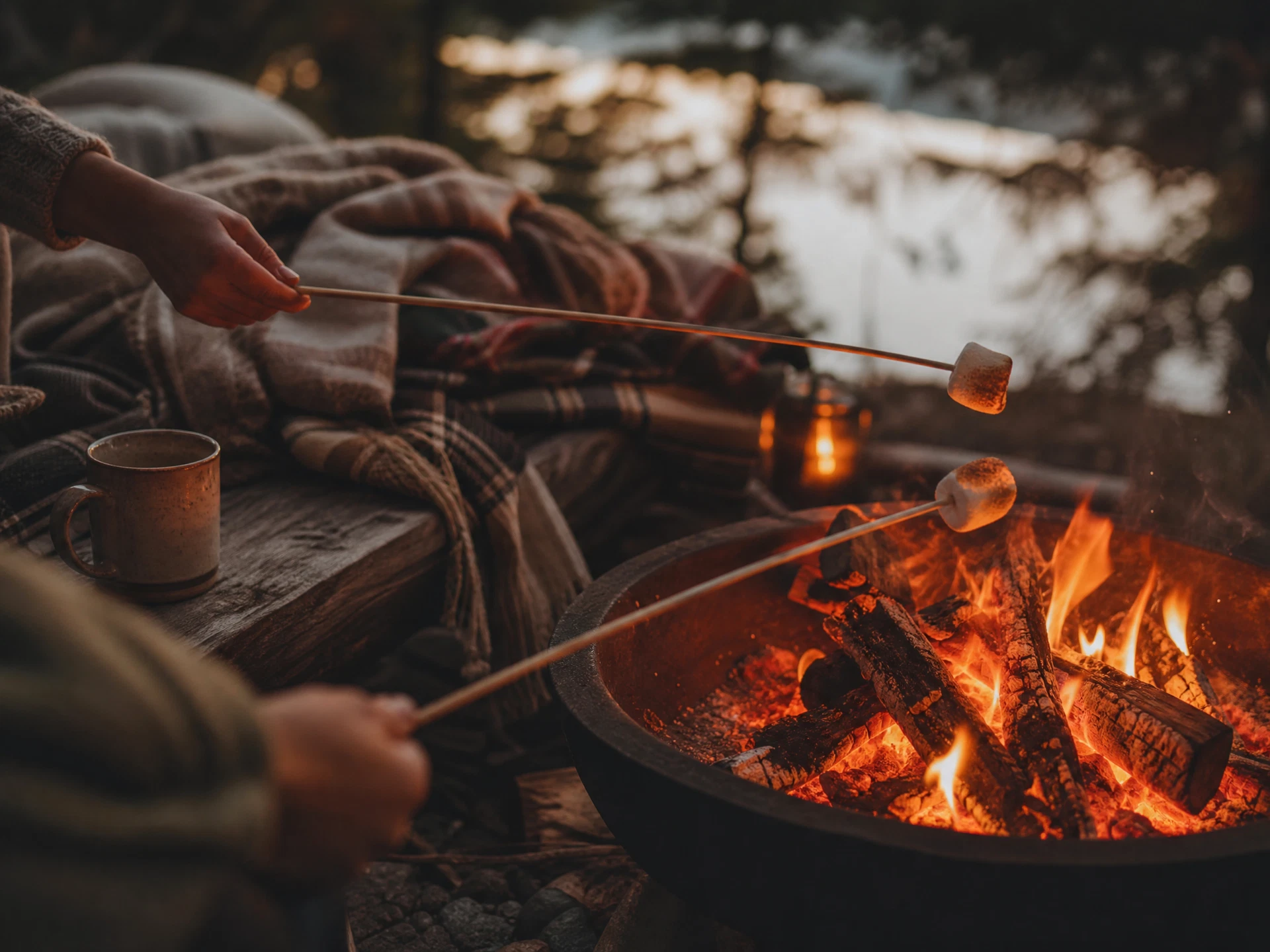
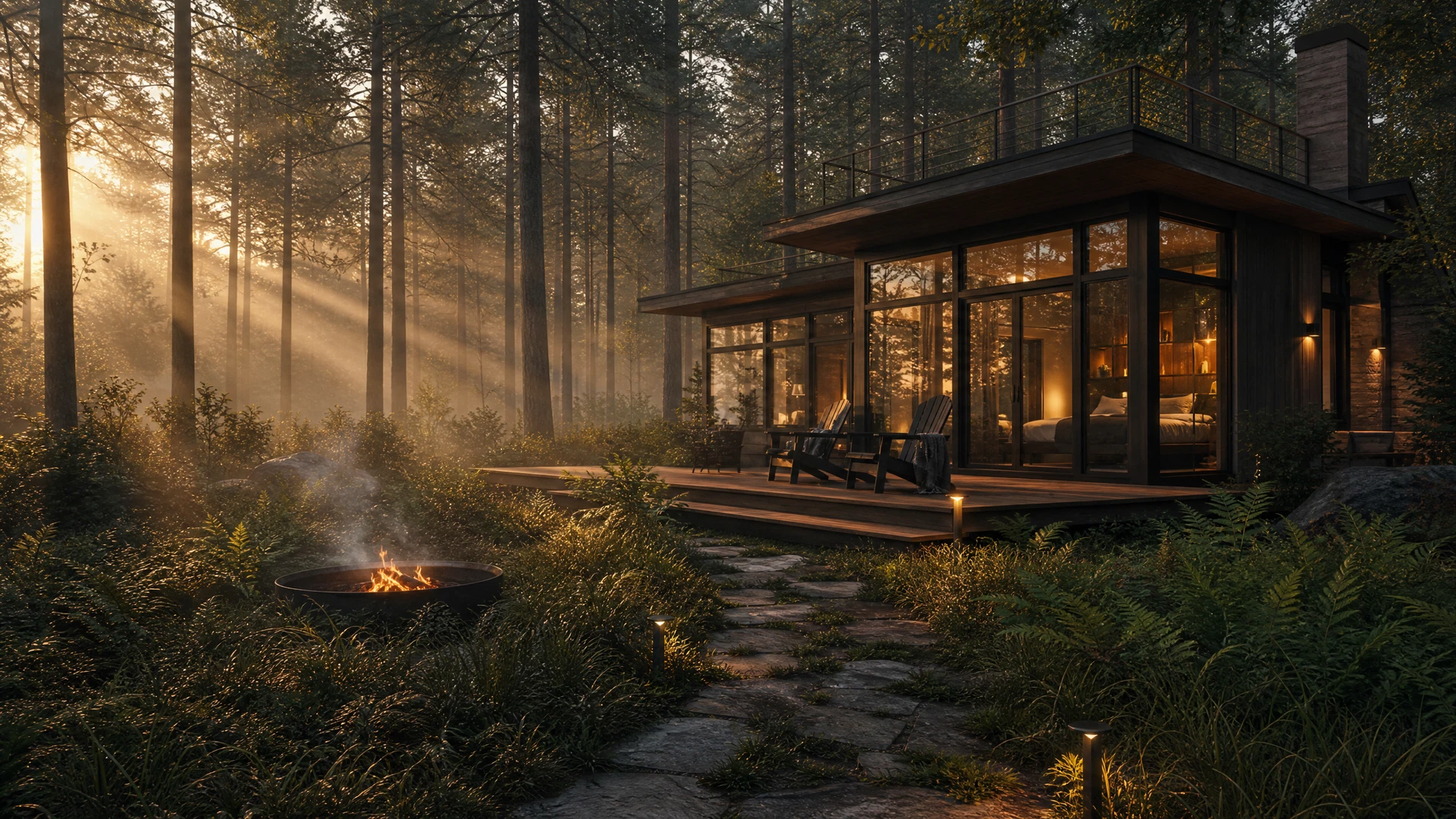
The first drawing we make of any retreat is not of the building. It is of the trees. Before a single line of architecture exists, we walk the site in every light the day offers — dawn, noon, dusk — and we map what is already there: the white pine that has held its corner of the ridge for eighty years, the beech grove that catches the morning sun, the sight line that opens toward the west and the one that should remain closed. The building comes later, and it comes politely. It asks the forest where it may stand.
This is the opposite of how most development works, and we are at peace with that. The prevailing method is subtraction: clear the lot, flatten the grade, then place a structure that could sit anywhere on land that could be anywhere. What is lost is not merely trees. It is the very thing a guest drives three hours to feel — the sense of being received by a place older and more patient than themselves.
Designing in Deference
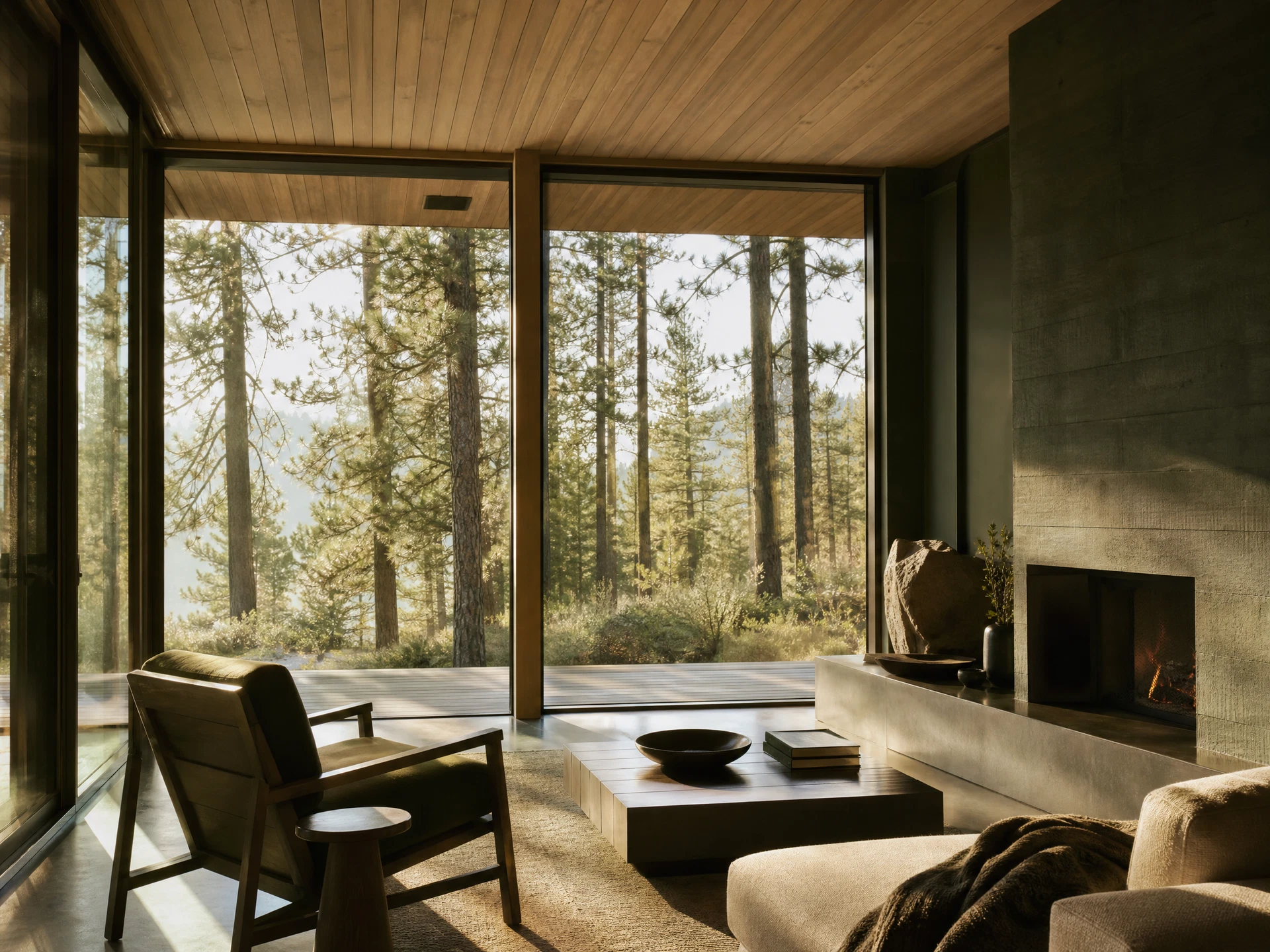
Deference, in practice, is a series of small stubborn decisions. It means bending a deck around a maple rather than through it, and accepting the more interesting geometry that results. It means setting a roofline below the canopy so that from the ridge trail, the building reads as shadow rather than silhouette. It means glass — a great deal of glass — placed not for spectacle but for specific trees: a bedroom window composed around a birch the way a gallery hangs a painting.
“The building comes later, and it comes politely. It asks the forest where it may stand.”
Materials follow the same logic. Cedar that will silver to the color of the beech bark beside it. Blackened steel that recedes into shadow at dusk. Stone gathered from the region's own glacial fieldstone, so the fireplace shares a geology with the ground beneath it. Inside, the palette stays quiet — warm white, forest green, charcoal, brass — because the view is the artwork and everything else is the frame.
What the Forest Gives Back
A building that listens is a building that teaches. Guests notice, sometimes without knowing what they are noticing: the way morning light arrives filtered and green rather than glaring; the way the rooms feel cooler in July because the canopy was never cut; the way an evening on the deck is scored by wind moving through needles that were spared. Comfort, it turns out, was never at odds with reverence. The most luxurious thing we can build is a room that makes the forest feel closer, not further away.
We will build more retreats in the years ahead, in other corners of Michigan. Each will be different, because each forest is different. But the first drawing will always be the same: not the building — the trees.
The Woods Journal · Saugatuck, Michigan